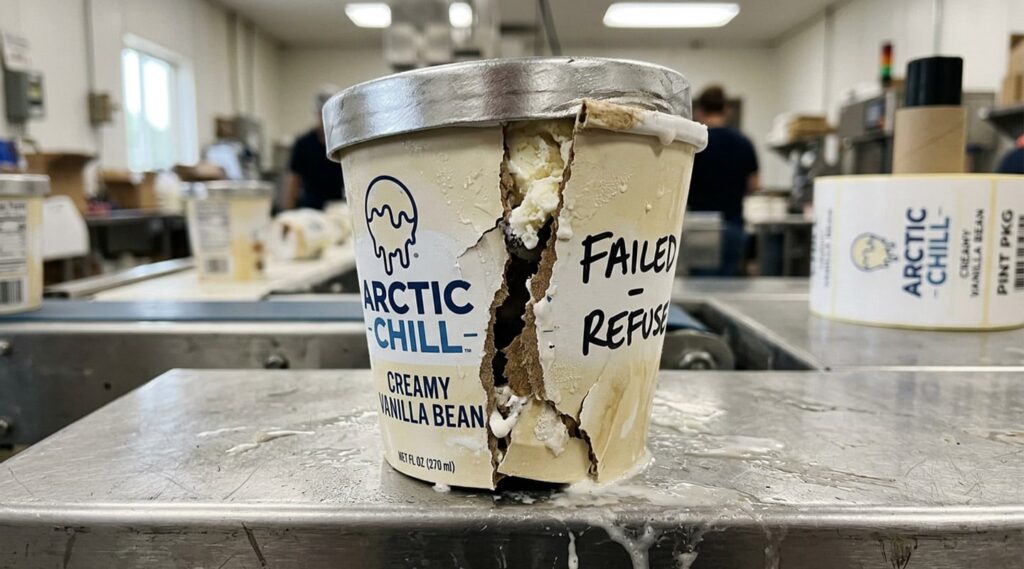
A container may meet basic specs on paper. It looks great, is priced right, and seems ready to go. But if it doesn’t run well on the line, protect the product, hold up through filling, or support consistent branding, it can create major problems for your brand.
Choosing a food packaging supplier means finding a partner—not just a manufacturer—who understands how your container must function once it reaches the production floor, moves through distribution, sits on the grocery store shelf, and ends up in the consumer’s hands. The questions you ask before selecting a supplier can reveal just as much as the quote itself.
Let’s review five key areas every food brand should examine before committing to a packaging partner.
When Can We Bring You into the Project?
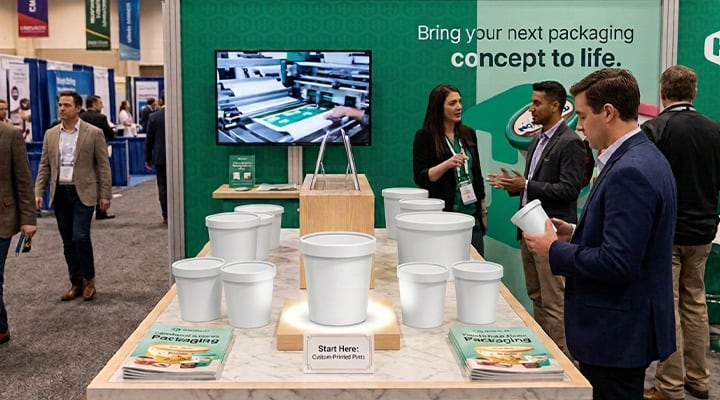
Packaging decisions are stronger when suppliers are involved early on in the planning and product development process. Material, structure, decoration, and production requirements must work together, especially in food applications.
The FDA considers food packaging and its components part of the broader category of food contact substances, which makes early material and design decisions even more important.1
Early supplier input can help teams think through materials, structure, tooling, decoration, production requirements, and performance needs before those choices become harder to change.
This is valuable when launching a new product, scaling into new sizes or formats, solving a packaging challenge that doesn’t fit a standard option, and bringing more balance between brand goals and production realities.
A supplier with in-house engineering, prototyping, tooling, and mold-making can help teams move from idea to testable concept with fewer delays and outside handoffs. That early collaboration can avoid unfortunate surprises when it’s time to move into production.
Will Your Containers Run Well on Our Production Line?
Packaging doesn’t exist in isolation. It has to work with real equipment, production rates, operators, and timelines. A container that looks right but doesn’t run efficiently can create slowdowns, rejects, sealing issues, inconsistent filling, added labor, or production adjustments.
Before choosing a supplier, be sure to get answers to these questions:
- Will this package design work with our current equipment?
- Can this package support our filling, sealing, and handling process?
- Will this package hold up at our expected production rates?
- How will this package perform during stacking, freezing, palletizing, or shipping?
- Can this supplier support technical conversations with our plant or engineering teams?
Small packaging details can create big operational effects. A strong supplier understands those details early, before they become plant-floor problems.
How Will Your Containers Perform After Filling?
Packaging performance doesn’t stop once the product is in the container. McKinsey’s 2025 global packaging research found that food safety and shelf life are the most important packaging characteristics influencing consumer purchasing decisions, which reinforces how much product protection matters after filling.2
Depending on the application, food packaging may need to handle refrigeration, freezing, moisture exposure, cold-fill conditions, transport, stacking, warehousing, retail display, and consumer use.
And a container that works well for one category may not work for another. Frozen desserts, refrigerated foods, dry goods, snacks, and specialty applications all place different demands on materials, structure, lids, seals, and graphics.
Food brands should ask how the supplier evaluates the full packaging lifecycle:
- Will the container protect the product through expected conditions?
- Will the container lid maintain its fit throughout the intended lifecycle?
- Will the structure hold up during handling and distribution?
- Will the container still look and function the way the brand expects?
- Has this supplier worked with similar product types or use cases?
The goal is to create packaging that performs from production through final use. And if it’s a resealable container, beyond even that.
Can You Protect Our Brand Integrity at Scale?
Packaging is one of the most visible parts of the product experience. It affects first impressions, shelf appeal, brand recognition, and repeat purchases.
But as brands grow, maintaining that consistency can become harder. New sizes, seasonal offerings, line extensions, updated graphics, and expanded distribution all add complexity. Print quality, color consistency, decoration, structure, and finish need to hold up across runs and formats.
That’s why food brands need information on more than just production capacity. Look at how a supplier supports design execution, and ask questions like:
- Can this supplier support pre-press and print quality?
- How does this supplier maintain consistency across runs?
- Can this supplier align design intent with manufacturing requirements?
- Does this supplier offer decoration or finishing options that support shelf appeal?
- Can this supplier support future product lines or packaging updates?
The best packaging providers understand that a container has to represent a brand impeccably at every touchpoint with consumers.
How Flexible Are You When Our Needs Change?
Food brands know plans can change quickly. Demand spikes. Forecasts change. Designs get redone. Launch windows tighten. And when that happens, the supplier’s responsiveness can truly make or break a project.
Before choosing a packaging partner, get a clear understanding of how that supplier handles change:
- How quickly does the supplier communicate updates with clients?
- Can this supplier support urgent requests when needed?
- How flexible is this supplier’s production process?
- How does the supplier manage design or specification changes?
- What happens when an issue comes up close to launch?
A responsive container vendor helps teams keep changes manageable. They provide clear answers, realistic timelines, and practical support when the path isn’t perfectly predictable.
Better Questions Lead to Better Supplier Decisions
Asking the right questions upfront helps separate suppliers that simply manufacture containers from true partners that can support your business over the long term.
Here’s a recap of the key questions to ask, along with how Double H Packaging helps answer them from the start:
When can we bring you into the project?
As early as possible. We work with food brands during product and packaging development to weigh in on materials, container design, decoration, tooling, manufacturing requirements, and production considerations before final decisions become difficult or costly to change. Our in-house engineering, prototyping, tooling, and mold-making capabilities help move ideas into production more efficiently.
Will your containers run well on our production line?
This is one of our biggest priorities. We design packaging with real production environments in mind, so containers perform reliably through filling, sealing, handling, stacking, freezing, palletizing, and distribution. Our team works closely with customers to understand production requirements and help prevent issues.
How will your containers perform after filling?
Performance doesn’t stop once the product is packaged. We help customers choose the right materials and container designs based on how products will be stored, transported, displayed, and used. Whether an application requires freezer durability, moisture resistance, secure lid fit, or dependable product protection, we develop packaging built for the full lifecycle.
Can you protect our brand integrity at scale?
Yes. Our in-house pre-press, print, and manufacturing capabilities help maintain consistency across production runs, product lines, and packaging formats. We focus on delivering containers that consistently reflect your brand through reliable quality, accurate decoration, and dependable manufacturing processes.
How flexible are you when our needs change?
Our vertically integrated capabilities, responsive communication, and hands-on approach mean we’re able to adapt more quickly when your team needs changes or wants to jump on a new opportunity. Our goal is to keep projects moving with realistic solutions and clear communication.
Our business goes beyond cups, lids, and containers. We help packaging perform where it matters: on the line, in transit, on the shelf, and in the consumer’s hands.
Contact us to explore our packaging capabilities, meet our team, and see if we’re the right partner for your products and production needs.
Sources:
1. Food Packaging & Other Substances that Come in Contact with Food – Information for Consumers, FDA
2. Sustainability in Packaging 2025: Inside the Minds of Global Consumers, McKinsey & Company